
Decentralized Applications (dApps): Complete Guide to Blockchain-Based Apps
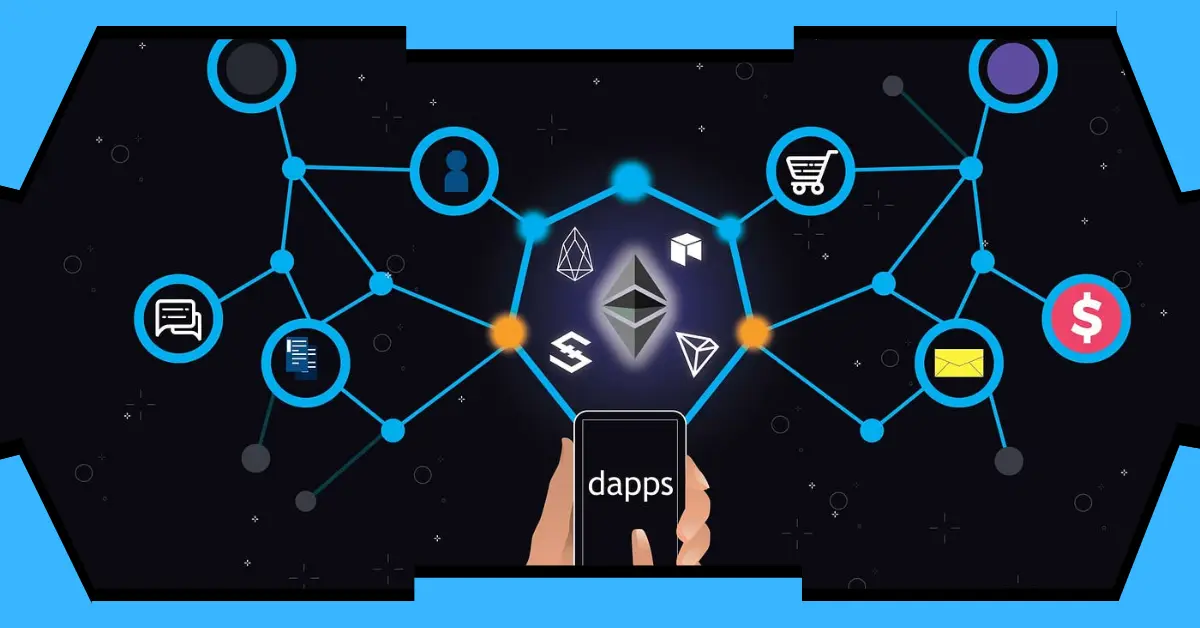
Blockchain technology is a relatively new addition to our centuries-old financial system. It has evolved rapidly in less than two decades, reshaping everything with decentralization. One of the biggest innovations to emerge from this evolution is decentralized applications or dApps. They are changing how people are using online platforms, with more freedom and more privacy. Decentralized applications are shaping the new era of online experience.
What Are Decentralized Apps?
Decentralized Apps (dApps) are applications that are built on blockchain technology. Unlike traditional apps, these apps are not controlled by a centralized authority and run through a decentralized blockchain network.
How Do dApps Work?
Centralized apps are controlled and managed by an entity that owns them. Meanwhile, dApps are powered by smart contracts. Smart contracts are digital, self-executing agreements written in code, without an intermediary. To use a decentralized application, you often need to connect it to your crypto wallet. This step is not needed for basic uses such as exploring interfaces and checking token prices, as it gives read-only access by default.
Some dApps can only be used on a single blockchain, while some have separate versions for different blockchains. Along with that, cross-chain or omnichain dApps use protocols like a bridge to transfer data and assets between different networks.
What Are the Different Types of dApps?
Other than the operation on blockchain networks, decentralized applications can be classified based on their use case.
DeFi dApps
DeFi (Decentralized Finance) dApps offer financial services similar to traditional banking services, but without an intermediary. They offer various services such as trading, lending, and borrowing. You need to connect your wallet to use the services of financial dApps. DeFi dApps include:
- Decentralized Exchanges (DEXs): For peer-to-peer transactions of crypto assets without intermediaries.
- Lending and Borrowing Platforms: For lending crypto to gain interest, and for borrowing stablecoins/fiat money by keeping crypto assets as collateral.
- Yield Farming and Aggregators: For staking crypto assets to earn rewards through automatically moving funds across different protocols.
GameFi dApps
GameFi apps enhance the experience of gaming by allowing players to have ownership over their in-game assets as NFTs (non-fungible tokens). Players can earn, trade, and sell their virtual assets. These transactions can be made at dedicated NFT marketplaces. GameFi dApps include:
Play-to-Earn: Players can earn rewards for playing games and achieving milestones.
Move-to-Earn: Users can earn rewards through physical activities such as walking or dancing.
NFT Marketplace: A platform for buying, selling, and trading non-fungible tokens.
Social dApps
Social dApps are blockchain-based social media platforms. Unlike general social networks such as Instagram and X, social dApps offer complete control to the user over their identity and data.
Pros and Cons of dApps
Advantages of dApps
- Transparency: Blockchain technology makes transactions and operations publicly verifiable.
- Privacy: Many dApps allow users to use wallet addresses rather than personal identities.
- Ownership: Users have complete ownership over their assets without depending on centralized institutions.
- Autonomy: Smart contracts help in automating the process, reducing the reliance on third parties.
Disadvantages of dApps
Scalability: High network congestion leads to slower transactions and increased fees.
Maintenance: More difficult to maintain as updating smart contracts is a complex process.
Regulatory Uncertainty: Governments worldwide are still developing regulations for blockchain technologies.
Steep Learning Curve: Crypto-related activities can be overwhelming for beginners.
Difference Between Centralized Apps and Decentralized Apps
These are the core differences between centralized apps and decentralized apps.
| Feature | Centralized Apps | Decentralized Apps |
| Control | Controlled by a single organization | Operates through decentralized blockchain networks |
| Transparency | Limited Transparency | Publicly verifiable |
| Intermediaries | Heavily relies on third parties | Less dependent on intermediaries |
| Privacy | User data is collected and monetized | Requires minimal information |
| Examples | Instagram, PayPal | Uniswap, Axie Infinity |
Final Thoughts
Similar to how cryptocurrency reshaped the financial ecosystem, dApps are reshaping online experiences. It is opening new ways to manage and interact with online spaces. Be it in financial services, gaming experience, or social networking, decentralized applications represent the new era of user-controlled internet experience.
Also Read: WLFI Price Prediction 2026
