
Tether Plans Native USDT Launch on Bitcoin Through RGB Protocol Before Mainnet
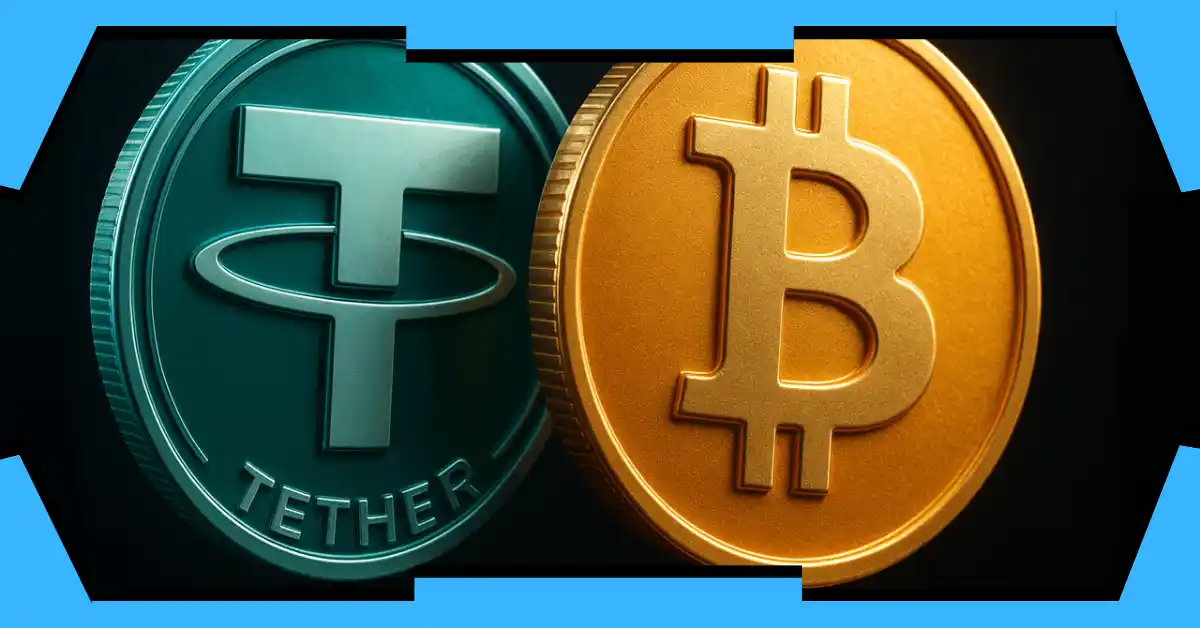
Tether Native USDT Launch on Bitcoin marks a historic return for the world’s largest stablecoin to its original blockchain. Announced in August 2025 and now accelerating toward rollout, Tether is preparing to issue USD₮ natively on Bitcoin using the RGB protocol. This move, commercially led by UTEXO, promises faster, more private, and lower-cost transactions while leveraging Bitcoin’s unmatched security.
Unlike previous wrapped or bridged versions of USDT on Bitcoin, this implementation uses RGB’s client-side validation model. Bitcoin serves strictly as the settlement layer, keeping asset data off the main chain for efficiency while anchoring everything to Bitcoin’s robust UTXO model. The integration with the Lightning Network further enables instant off-chain transfers, addressing long-standing limitations in stablecoin usability on Bitcoin.
Why This Matters: A Full Circle Moment for USDT
USDT first launched in 2014 on Bitcoin via the Omni Layer. Over the years, it migrated to higher-throughput chains like Ethereum and especially Tron, where low fees drove massive adoption in developing markets. However, these alternatives introduced trade-offs in security, privacy, and decentralization.
Tether Native USDT Launch on Bitcoin aims to bring the stablecoin “home” with modern infrastructure. Paolo Ardoino, CEO of Tether, emphasized Bitcoin’s foundational role: “Bitcoin deserves a stablecoin that feels truly native, lightweight, private, and scalable.” With over $170 billion in circulating supply, even a modest shift in volume could significantly boost Bitcoin’s utility as a global settlement rail.
UTEXO, which raised $7.5 million in a seed round co-led by Tether in early 2026, is handling the commercial rollout. The company provides APIs, SDKs, a mint bridge, and infrastructure that simplifies integration for wallets, exchanges, and payment providers. This “last mile” work is crucial for moving beyond technical proof-of-concept to real-world adoption.
How RGB Protocol Powers the Launch
RGB combines Bitcoin’s UTXO model with client-side validation. Instead of bloating the blockchain with asset data, ownership records and transaction history are validated by users’ wallets. This design delivers:
- Enhanced Privacy: Fresh addresses for each transaction reduce linkage attacks common on account-based chains like Tron or Ethereum. Lightning payments leave minimal on-chain footprints.
- Low Costs and Speed: Deterministic fees and instant Lightning settlements eliminate the need for separate gas tokens (like TRX on Tron).
- Native Experience: Users can hold and transfer BTC and USDT in the same wallet without bridges or custody changes.
- Scalability: Supports potential future smart contract functionality through tools like the Alluvium VM while remaining lightweight.
Version 0.11.1 of RGB reached mainnet recently, enabling this production-ready deployment. Federico Tenga from Bitfinex R&D contributed significantly to the protocol’s development.
Benefits for Users, Businesses, and the Bitcoin Ecosystem
For everyday users, Tether Native USDT Launch on Bitcoin means seamless, private dollar-pegged transfers secured by the world’s strongest blockchain. Payment service providers and exchanges can integrate via UTEXO’s unified API, offering predictable costs and instant settlements without pre-funding large balances.
Bitcoin DeFi could receive a major boost. Developers and users gain access to stable liquidity directly on Bitcoin rails, potentially unlocking new yield opportunities, decentralized swaps, and composability. Compared to Tron, which dominates USDT volume due to speed but suffers from centralization risks and extra token friction, RGB offers superior security and privacy at competitive performance.
Early estimates suggest this could redirect meaningful volume back to Bitcoin, strengthening the network’s monetary properties and Lightning Network liquidity.
Preparing for the Launch: Practical Considerations
While full mainnet rollout is expected in the coming weeks (potentially as early as July 2026), users and developers can prepare now:
- Monitor Tether Wallet and other compatible wallets for RGB support.
- Test UTEXO’s mint bridge for cross-chain transfers with deterministic low fees.
- Review Lightning Network node setups for advanced users seeking full sovereignty.
- Watch for exchange announcements,MEXC and others are already covering the development, signaling impending trading pairs.
A simple onboarding flow might involve installing a compatible wallet, receiving USDT via Lightning or on-chain RGB, and transacting privately with fresh UTXOs.
Risks and Challenges to Consider
No major development is without hurdles. RGB’s client-side validation, while powerful, introduces complexity compared to simpler account models. Wallet support and user education will be critical for mass adoption. Regulatory scrutiny around stablecoins and off-chain components remains a factor, particularly for compliance-focused institutions.
Liquidity fragmentation during early stages and potential smart contract limitations (relative to Ethereum’s mature ecosystem) are also worth monitoring. Tether’s centralized issuance model persists regardless of the underlying chain, so users should maintain standard due diligence on reserves and transparency.
Despite these challenges, Tether’s commitment,backed by years of exploration and UTEXO’s focused infrastructure,positions the project for success. Delays in RGB historically allowed Tron’s dominance; this launch aims to close that chapter decisively.
How to Prepare for Tether Native USDT Launch on Bitcoin
- Follow official channels (Tether.io, UTEXO, RGB docs).
- Set up a compatible wallet supporting RGB and Lightning.
- Test small transfers via the UTEXO mint bridge.
- Monitor exchange announcements for trading pairs.
- Educate yourself on UTXO management and Lightning best practices.
Tether Native USDT Launch on Bitcoin is more than a technical upgrade , it reinforces Bitcoin’s role as the ultimate settlement layer for global money.
Market Implications and Future Outlook
Tether Native USDT Launch on Bitcoin could reshape stablecoin flows globally. By combining Bitcoin’s security with USDT’s liquidity, it strengthens the case for Bitcoin as more than just a store of value. For emerging markets reliant on dollar stability, it offers a more resilient alternative with enhanced privacy.
Longer term, expect expansions into yield-bearing products, deeper DeFi integrations, and broader wallet/exchange support. As Lightning Network capacity grows, the vision of instant, private, Bitcoin-secured dollar transfers moves closer to reality.
This development underscores Tether’s ongoing innovation and Bitcoin’s enduring relevance in the cryptocurrency landscape. Stakeholders across the industry will be watching closely as the rollout unfolds in the coming weeks.
